


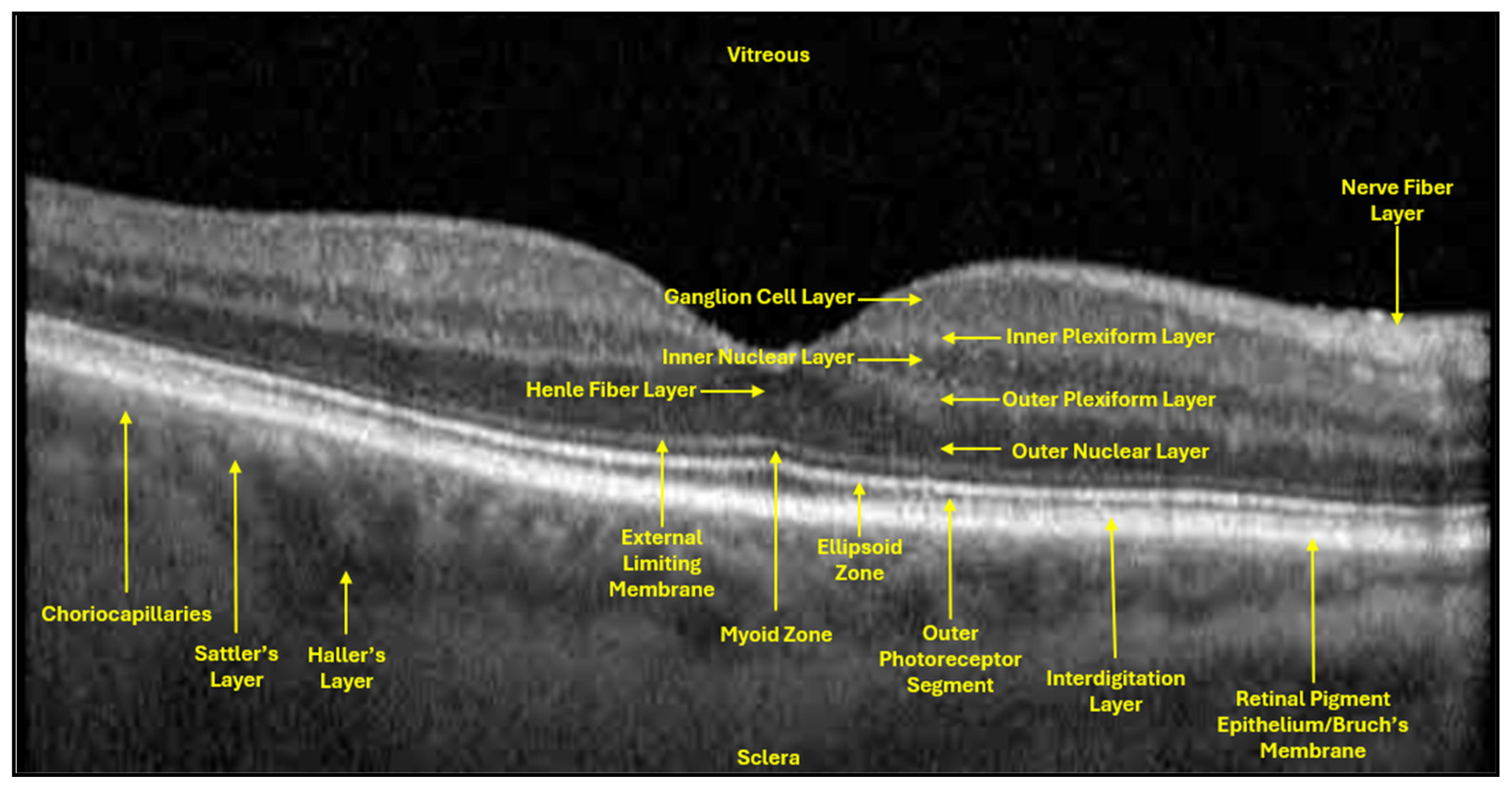
Image: B-scan of the retina showing the various layers of retina and choroid by Firoz, M.; Shome, N.; Wong, N.; Jonnalagadda, P.; Tunga, H.; Shafiee, A.; Shafiee, A.; Bobba, S.; Kooner, K.S., CC BY 4.0.

Inherited retinal diseases (IRDs) are a diverse group of conditions caused by genetic changes that damage the retina, the light-sensitive tissue at the back of the eye. As retinal cells are lost, researchers are investigating whether stem-cell-derived treatments could replace damaged cells or help protect those that remain.
From replacement cells to retinal support
One approach uses human embryonic stem cells to produce retinal pigment epithelium (RPE), a layer that supports photoreceptors. Early studies in Stargardt disease and geographic atrophy have tested subretinal injections containing between 50,000 and 200,000 RPE cells. These Phase 1 and Phase 1/2 studies have focused mainly on safety, tolerability and whether transplanted cells can survive and integrate in the intended location.
Other programmes use retinal progenitor cells. These immature cells may develop into retinal cell types and could potentially replace lost photoreceptors or release signals that support surviving cells. A randomised Phase 2 study in retinitis pigmentosa assessed intravitreal retinal progenitor-cell treatment against a sham procedure, measuring vision, contrast sensitivity, visual fields and patient-reported function.
Why clinical translation remains challenging
Laboratory success does not automatically predict a clinical benefit. Researchers must establish where cells should be delivered, how many are needed and whether they remain functional over time. They must also monitor inflammation, immune reactions, abnormal growth and possible tumour formation. Surgery itself can carry risks, particularly when patients retain useful vision.
Cell therapy may ultimately be combined with gene, RNA or optogenetic treatments. However, current evidence remains early, and trial results need careful interpretation. For biotech, pharmaceutical and healthcare organisations, understanding the maturity of each programme is essential when assessing development plans, partnerships and investment opportunities.