


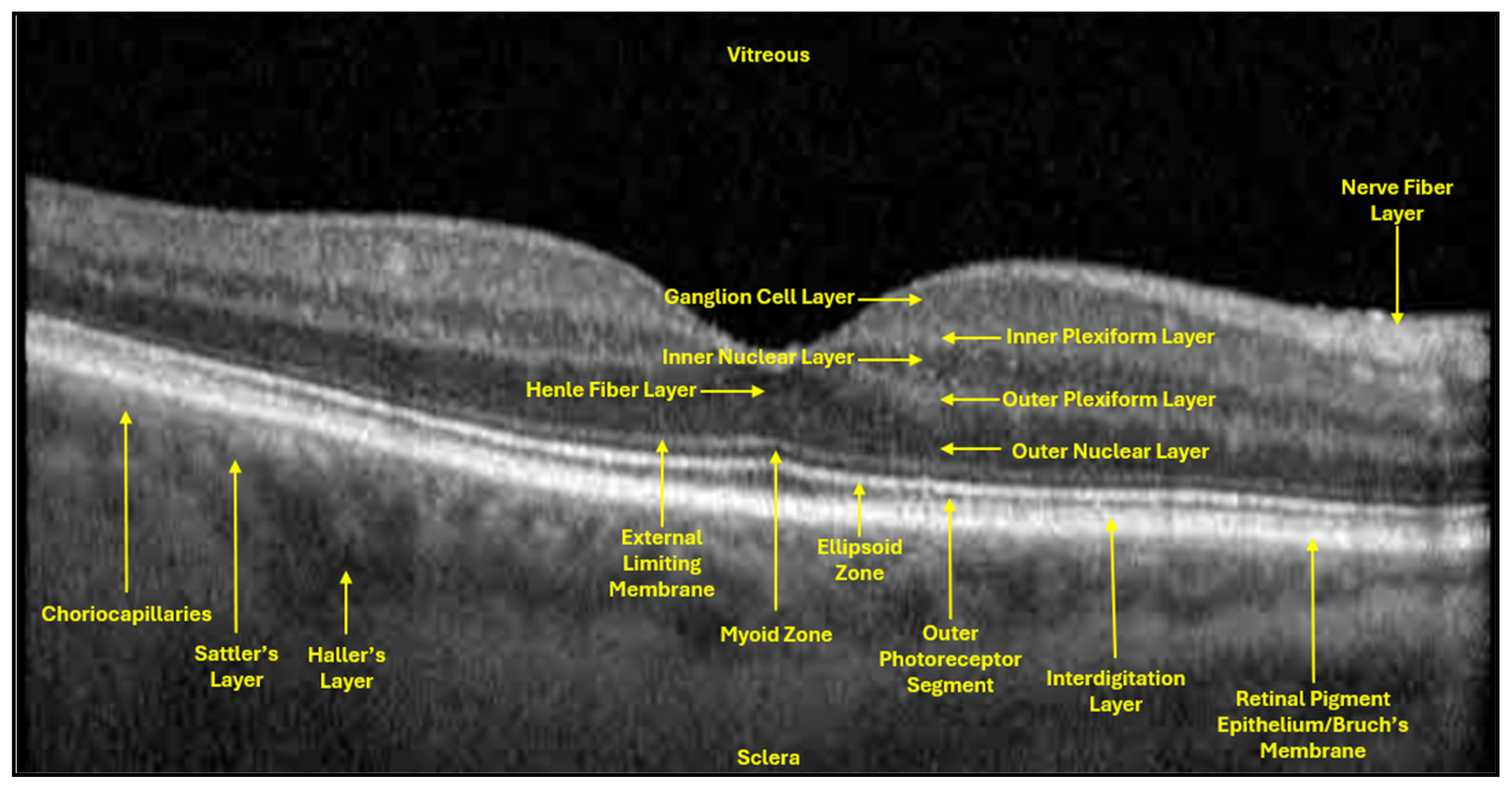
Image: B-scan of the retina showing the various layers of retina and choroid by Firoz, M.; Shome, N.; Wong, N.; Jonnalagadda, P.; Tunga, H.; Shafiee, A.; Shafiee, A.; Bobba, S.; Kooner, K.S., CC BY 4.0.

Inherited retinal diseases (IRDs) are caused by changes in genes involved in the health and function of the retina. Conventional gene therapy usually delivers a working copy of a gene to retinal cells using a harmless viral vector. Gene editing takes a different approach: it aims to alter, silence or repair the faulty genetic sequence itself.
From CRISPR to more precise editing
CRISPR-Cas9 uses a guide molecule to direct an enzyme to a chosen DNA sequence, where it makes a cut. This may allow a harmful mutation to be disrupted or corrected. Base editing can change one DNA letter into another without creating the same type of double-strand break. Prime editing is designed to make more flexible, targeted changes by using a modified editing system to write new genetic information into the sequence.
These approaches could be valuable where a gene is too large for conventional viral gene replacement. However, important challenges remain: reaching enough surviving retinal cells, controlling editing accuracy, managing immune responses to the delivery vehicle and demonstrating long-term safety. Treatments are also likely to remain mutation-specific, at least initially.
Early clinical evidence
The field is beginning to move from laboratory research into human studies. A Phase 1 study of ZVS203e is investigating an AAV-delivered CRISPR/Cas9 approach intended to silence mutant RHO in adults with retinitis pigmentosa. Separately, the STELLAR study is evaluating ACDN-01 for ABCA4-related disease. This uses RNA exon editing rather than permanent DNA editing, an approach that may help address large genes such as ABCA4.
What to watch next
For investors, developers and healthcare organisations, the key questions are whether editing can be delivered safely, produce meaningful visual benefit and remain durable. Trial status and methodology also need careful review: “CRISPR” may refer to DNA or RNA targeting, and registry listings are not evidence of efficacy. These early programmes nevertheless mark an important step towards more precise, potentially personalised treatments for IRD.